
Forget forking, Google 'porked' Windsurf
Plus: Maintainer burnout a ‘structural problem,' and much more.

Hi folks,
The lead story this week digs into the debate around “porks” — the idea that proprietary forks deserve their own label — following fresh scrutiny of Google’s Antigravity platform and its Windsurf lineage.
Elsewhere, there’s new analysis on maintainer burnout, fresh open-source moves from Mozilla, Ai2 the Linux Foundation, and much more.
As usual, feel free to reach out to me with any questions, tips, or suggestions: forkable[at]pm.me.
Paul
Open issue
Google brings home the bacon
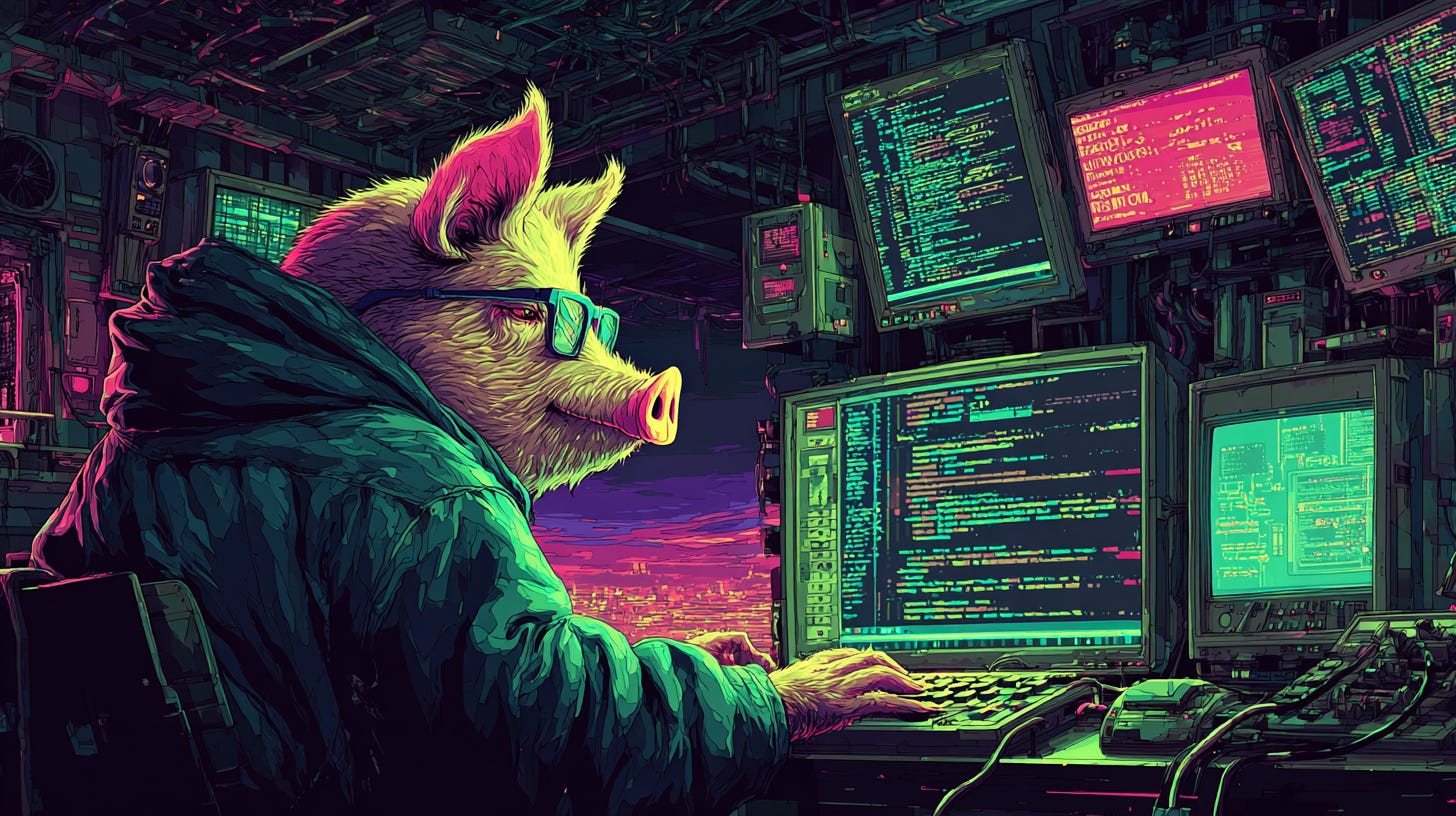
“Forking” is a concept that anchors much of the open source world, describing the moment when someone takes an existing codebase and carries it in a new direction. But what happens when a company appears to fork a closed, commercial product instead of an open one? That’s the dilemma explored by AI coding agent startup Kilo Code, which argues that this kind of move deserves its own label: “pork.”
The term came about after Google released its latest AI model, Gemini 3, accompanied by its new agentic development platform Antigravity. Early chatter focused on whether Antigravity was simply another VS Code fork, a reference to the open source code editor that many developers know and love. But as developers dug in, they found broad references to Windsurf (an AI-powered IDE) and Cascade (Windsurf’s coding agent) scattered throughout Antigravity’s interface and packaged code.
Windsurf began life as a VS Code–based environment layered on its own closed-source agentic architecture. Back in July, Google licensed the underlying technology and acqui-hired key members of its founding team in a deal reportedly worth $2.4 billion. And it’s against that backdrop that the presence of Windsurf-related identifiers inside Antigravity led some observers to argue that Google’s new tool isn’t merely a VS Code fork, but something closer to a direct continuation of Windsurf under a different banner.
Darko Gjorgjievski, part of the developer relations team at Kilo Code, argues that the situation reflects a kind of fork that mimics open-source lineage while offering none of its transparency — a high-stakes proprietary fork (a “pork”) shaped by corporate licensing, closed code and limited visibility into what sits beneath the surface.
“Our research reveals that Antigravity isn’t just a VS Code fork, but a literal Windsurf fork,” he wrote. “Windsurf is proprietary software that Google licensed for close to $2 billion.”
The whole concept of “forks of forks” is, of course, nothing new in the open source sphere. As Gjorgjievski points out, Kilo Code itself began as a fork of Roo Code, which in turn stemmed from Cline, and that openness meant each project could build on the last while users benefited from a growing superset of features. But when the same pattern shows up in the closed source world (i.e. Antigravity building on Windsurf, which drew from VS Code) the transparency stops, and the lineage becomes something users must infer rather than inspect. And that’s the real divide between forks and porks: one invites participation, the other obscures it.
“You can’t fork PORKs,” Gjorgjievski said.
Read more: Kilo Code blog
Patch notes
Maintainer burnout a ‘structural problem’
A new report from the Open Source Pledge initiative suggests that burnout among open source maintainers is a structural issue rather than an individual one. It highlights chronic overwork, unpaid expectations and escalating pressure on maintainers whose projects underpin critical software infrastructure — and suggests that better funding, coordination and governance are needed to keep ecosystems healthy.
Read more: Open Source Pledge
Arduino’s new terms spark concern
Arduino’s updated terms of service (ToS) have raised alarm among hobbyists, as the company prepares to join Qualcomm in an acquisition first announced in October. Critics worry the changes may give the company more leeway to restrict third-party use, raising questions about how the platform’s open source roots will fare under new ownership.
Read more: Ars Technica
Google flexes its font chops
Google has released Google Sans Flex, a variable, open source typeface originally introduced with the company’s 2023 Material 3 update, offering an adaptable design with wide language support. The font is already drawing interest from Linux users, who can install it manually on Ubuntu and other distributions.
Read more: OMG! Ubuntu
Linux Foundation launches ORCA alliance
The Linux Foundation has introduced the Open Robust Compartmentalization Alliance (ORCA), a new industry group focused on advancing software compartmentalization. The effort aims to improve security by promoting designs that isolate components so faults or attacks can’t easily spread through a system.
Read more: The Linux Foundation
Mozilla unveils Tabs API for open source browser automation
Mozilla has released a new open source Tabs API that allows AI tools and automation frameworks to control browser tabs programmatically. The API is positioned as a foundation for smarter browser assistants, automated workflows and more capable developer tools.
Read more: WebProNews
Olmo 3 charts a path for open source AI models
The Allen Institute for AI (Ai2), a nonprofit research lab founded by Microsoft co-founder Paul Allen, has released Olmo 3, a new generation of its open source model family designed to make training and evaluation fully transparent.
The update lands as open weight models — including recent entrants from China such as DeepSeek — raise expectations around openness and performance. Olmo 3 responds by offering not just weights but a reproducible training stack, positioning it as a clearer, more inspectable alternative.
Read more: Ai2 blog
Pebble watch software now fully open source
The software powering the original Pebble smartwatch has been released under an open source license. The move gives the long-running community of Pebble enthusiasts full access to the firmware and app stack, ensuring the device can be maintained and modified well beyond its commercial lifespan.
Read more: Eric Migi blog
And finally…
A distraction-free computer by design
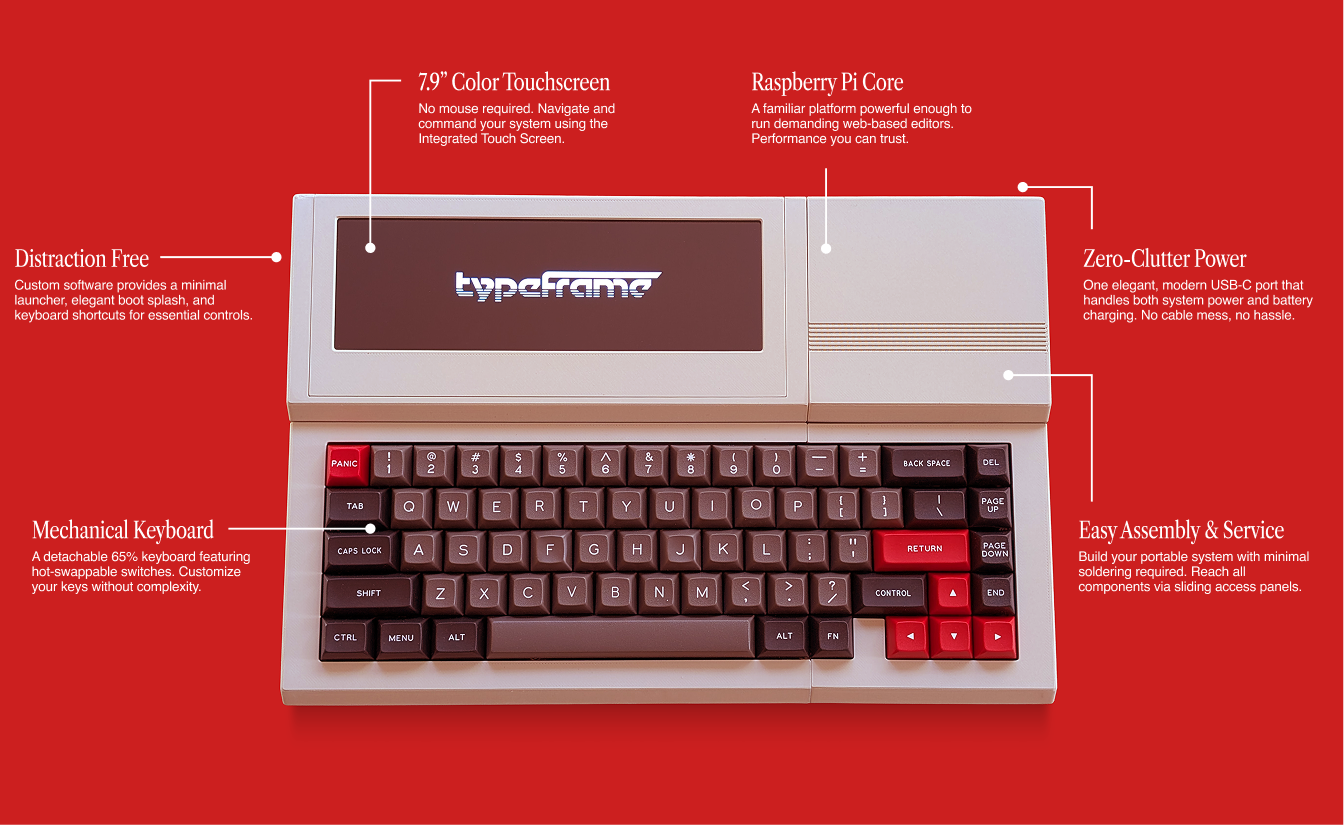
An open source “retropunk” computer is turning heads for its unapologetically minimal approach to getting work done. Built around a Raspberry Pi and wrapped in a chunky, 1980s-style shell, the TypeFrame PX-88 is designed for just one thing: writing, without the infinite temptations of modern apps, tabs or notifications. A sibling variant, the more compact PS-85, offers the same focus-first philosophy in a smaller writerdeck form.
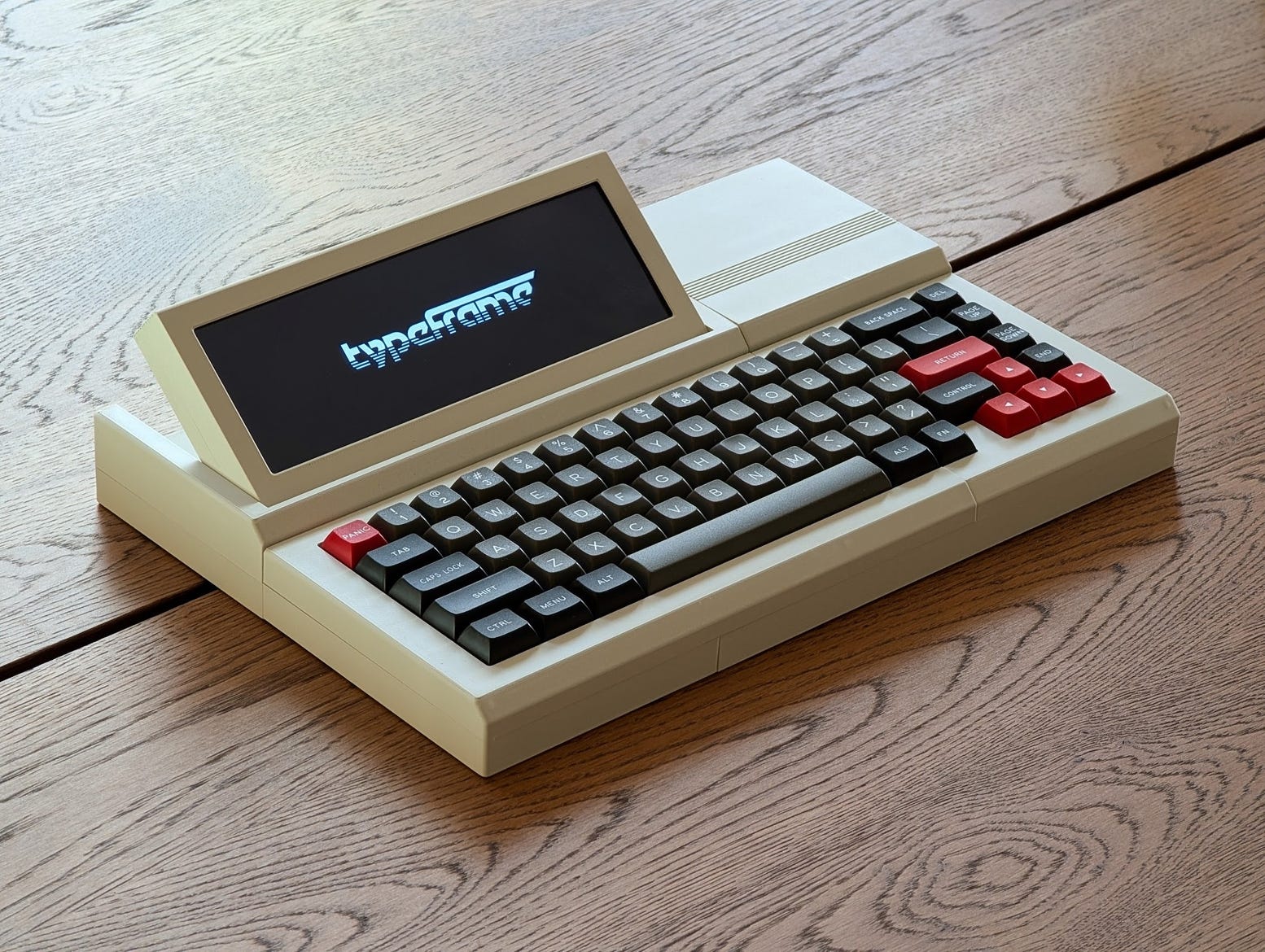
Its creator, designer Jeff Merrick, has released the full CAD files and electronics schematics, inviting anyone with a 3D printer and a soft spot for retro hardware to assemble their own. It’s a machine that treats focus as a hardware feature, not a settings option — and looks charmingly out of time while doing it.
Read more: Yanko Design / TypeFrame PX-88