
OpenAI, Anthropic, and Big Tech unite for the Agentic AI Foundation
Plus: IBM buys Confluent for $11B, & more

Hi folks,
This week’s lead story looks at the industry’s latest attempt to set common ground for agentic AI, as OpenAI, Anthropic and a wide cast of major tech companies rally around a new foundation for open standards.
Elsewhere, there’s a landmark acquisition in the streaming-data world, a serious 0-day hitting a long-running open-source Git service, fresh developer tooling from Mistral, a lively “open source vs source available” debate, and more.
As usual, feel free to reach out to me with any questions, tips, or suggestions: forkable[at]pm.me.
Paul
Open issue
A new dawn for agentic AI?

A new industry alliance is taking shape around the infrastructure that underpins agentic AI systems.
Hosted by the Linux Foundation, the Agentic Artificial Intelligence Foundation (AAIF) launched this week with a trio of big-name AI projects under its wing, with donations including Anthropic’s Model Context Protocol (MCP), OpenAI’s Agents.md specification, and Block’s local-first agent framework, Goose.
Arguably, the centrepiece of this week’s news is MCP, a fast-growing open standard introduced by Anthropic late last year to let AI systems interact with tools, data sources, and applications through a common interface. By placing MCP in an independent foundation, Anthropic argued that the protocol can evolve with broader community input and avoid being shaped by the priorities of any single company.
“The AAIF aims to ensure agentic AI evolves transparently, collaboratively, and in the public interest through strategic investment, community building, and shared development of open standards,” Anthropic wrote in a blog post.
Alongside MCP, the two other inaugural contributions provide a strong suggestion for what the foundation wants to become. Agents.md, debuted by OpenAI earlier this year, is also emerging as a widely adopted open standard for AI agents, designed to consolidate setup commands, build steps, coding conventions, and testing workflows into one file that every supported agent knows to check first.
And then there’s Goose, contributed by Square and Cash App–parent Block, which open-sourced the framework back in January. Goose provides a more controlled, predictable environment for building and executing AI agent workflows, with an emphasis on local-first operation rather than cloud dependence.
The launch also drew backing from a broad gamut of technology firms, including Amazon, Google, Microsoft, Nvidia, Shopify, Snowflake, Datadog, IBM, Docker, JetBrains, Salesforce and Uber. Notably, this shows that support cuts across nearly every layer of the software world, from the biggest infrastructure players to the tools and platforms millions of developers rely on.
While the foundation is still in its early stages, its formation marks a seismic shift: large AI firms publicly committing to open, neutral infrastructure for one of the field’s most strategically significant technologies.
The gist is this: establishing common ground now, reduces the risk of the agent landscape splintering later.
“We’re at a critical moment for AI – the technology that will define the next decade, that promises to be the biggest engine of economic growth since the Internet, can either remain closed and proprietary for the benefit of few, or be driven by open standards, open protocols, and open access for the benefit of all,” Block’s head of open source, Manik Surtani, said.
Read more: AI Native Dev & Anthropic
Patch notes
IBM buys Confluent for $11B
IBM is set to acquire Confluent, which offers an enterprise data-streaming platform built on the open-source Apache Kafka project. The deal, which values Confluent at $11 billion, is framed as a way to deepen IBM’s data and AI portfolio, bringing Kafka-based streaming, governance and integration tools under one roof so enterprises can feed real-time data into generative-AI and agent-driven systems more reliably.
Read more: IBM
Gogs hit by 0-day exploit
A previously unknown vulnerability in the open source Git service Gogs was found under active exploitation this week, prompting urgent updates across self-hosted installations. The flaw gave attackers a route into unpatched servers, with older deployments proving especially vulnerable. The incident adds another chapter to the project’s history of sporadic security challenges, and underscores the maintenance pressures that come with operating open source developer infrastructure.
Read more: The Register
Mistral expands its developer stack
French frontier AI model lab Mistral has introduced Vibe CLI, an open source command-line agent aimed at improving code-generation workflows. Alongside this, Mistral debuted DevStral 2, a new set of open-weight models for enterprise software engineering. By focusing on open source tooling and modifiable model weights, Mistral is positioning its developer stack as a more flexible alternative to proprietary, closed agent frameworks.
Read more: AI Native Dev
Linux shifts into gear
A new Linux-based automotive platform aims to bring over-the-air updates to consumer vehicles as early as 2027, leaning on open source foundations to give automakers more control over their software stacks. This reflects a broader push toward open standards and replaceable components in the auto industry, reducing reliance on closed vendor ecosystems and dealership-bound update cycles.
Read more: ZDNet
German state counts the cost of Microsoft
The German state of Schleswig-Holstein has long expressed its mission to move away from Microsoft products in favour of open source alternatives as part of a broader digital-sovereignty push. New figures suggest that strategy could be paying off: public administration estimates show as much as €15 million could be saved in 2026 alone from adopting open source office suites, mail systems and collaboration tools. That data offers concrete backing to a policy that has been watched closely across Europe, where governments are weighing the financial and strategic trade-offs of reducing dependence on proprietary platforms.
Read more: Heise
DeepSeek paper widens the open–closed debate
A new technical report from DeepSeek on its V3.2 model has sparked debate by arguing that the performance gap between open-source and closed-source large models is not shrinking but widening. The paper compares DeepSeek’s strongest open-source system against closed models like GPT-5 and Gemini 3.0 Pro, and points to three structural problems holding open source back: aging model architectures, smaller post-training compute budgets, and weaker agent capabilities. At the same time, it presents DeepSeek’s own work as evidence that open source can still compete through architectural innovation and smarter reinforcement learning, rather than trying to match proprietary players on raw resources alone.
Read more: 36kr
Another twist in Vizio GPL saga
A long-running legal dispute over Vizio’s compliance with GPL — a populer so-called “copyleft” license — took a turn this week when a U.S. appeals court revived the Software Freedom Conservancy’s (SFC) case. The judges ruled that consumers may have standing to enforce the GPL as third-party beneficiaries, reopening a lawsuit that had previously been dismissed. The decision adds a new chapter to the years-long saga over access to source code in Vizio’s smart-TV firmware, and could shape how open source rights and copyleft obligations are enforced across mass-market hardware.
Read more: The Register
And finally…
Open source world gets in a fizz
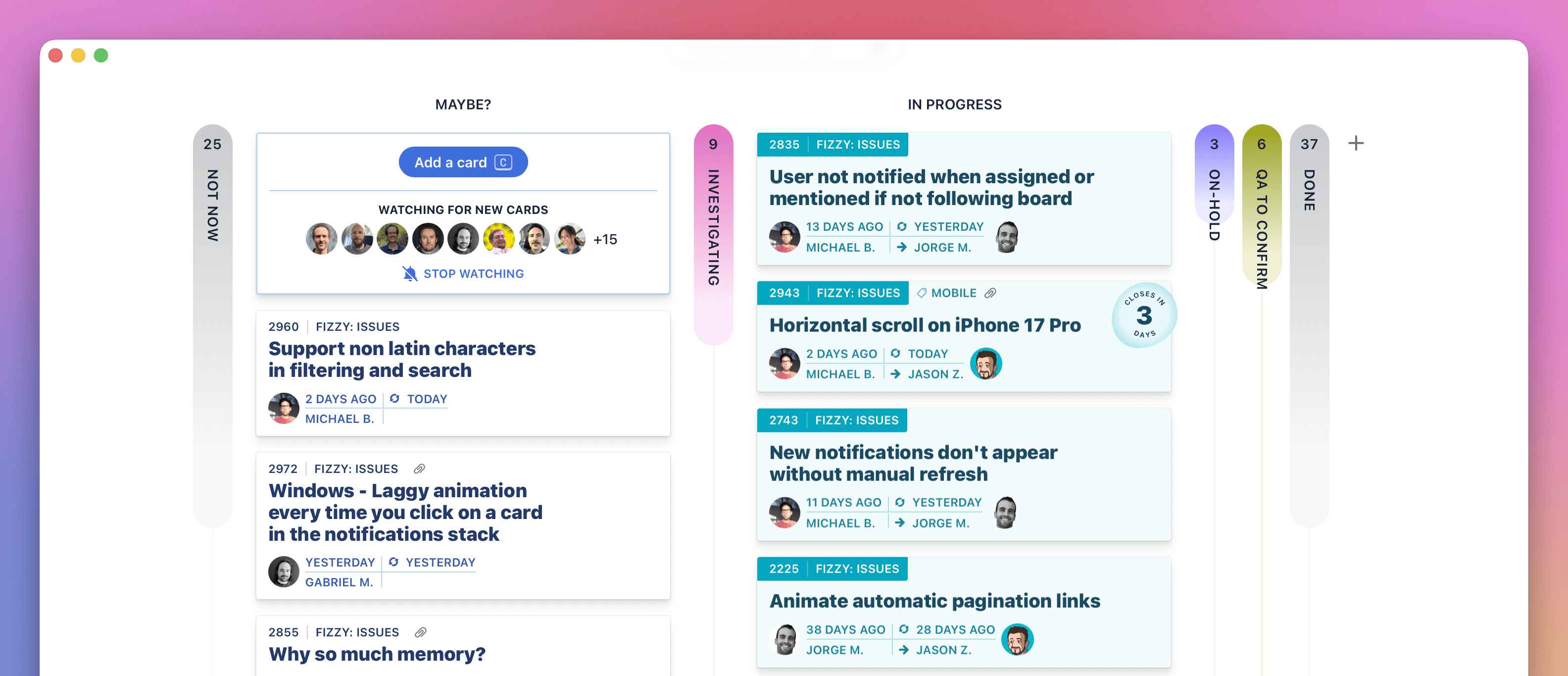
The debate over what counts as “open source” is as old as time, and this week it resurfaced once more with a high degree of vigour. The spark came when 37signals unveiled a new “open source” project called Fizzy, but under a home-grown licence dubbed O’Saasy. While it is apparently derived from the MIT licence, there are substantial restrictions that place it firmly in the realm of source-available, not open source.
WordPress co-creator Matt Mullenweg accused the folks behind Fizzy — which include Ruby on Rails’ creator David Heinemeier Hansson— of “greenwashing.” Drupal author Dries Buytaert, meanwhile, gently reminded everyone that “source available” is not the same as open source. And Sentry’s Chad Whitacre, a key figure behind a new licensing paradigm dubbed “fair source,” argued that while Fizzy is clearly source available, it sits close enough to the fair-source definition that a small tweak could bring it fully into that category. But yeah, it’s certainly not “open source.”
Hansson, for his part, brushed off the criticism, saying it was “hilarious” that calling Fizzy open source had triggered some developers, and defended O’Saasy on the grounds that it merely reserves SaaS monetisation rights for the original creators.
It’s a familiar dust-up, and a timely reminder that in an era crowded with bespoke licences and commercial hybrids, the label open source still carries enough weight that people will fight over who gets to use it.
Read more: Matt Mullenweg & Dries Buytaert & Chad Whitacre