
When AI floods the commons, maintainers shut the gates
Plus: ClickHouse claims Langfuse, vLLM creators raise $150M, & more

Hi folks,
This week’s lead story looks at how AI is reshaping open source contribution, as maintainers push back against a surge of low-effort, machine-generated pull requests that threaten the sustainability of shared projects.
Elsewhere, we track the business and policy shifts orbiting open source: the creators of the vLLM inference engine raise a $150 million seed round to commercialize their work, a warning about memecoin schemes, and more.
As usual, feel free to reach out to me with any questions, tips, corrections, or suggestions: forkable[at]pm.me.
Paul
Open issue
‘Death by a thousand pull requests’

Open source has always had a fair amount of natural friction, shaped by community dynamics and the slow, human slog of reviewing and fixing bugs. But that friction, for the most part, was a happy function of a healthy project ecosystem.
With the advent of AI, however, that balance is being disrupted by tools that remove the "human" element from the equation, replacing it with a deluge of “drive-by” contributions that are overwhelming software communities.
Indeed, maintainers across popular projects are reporting a surge of low-effort contributions generated by AI coding tools. As Mitchell Hashimoto, founder of HashiCorp and maintainer of the Ghostty terminal emulator, put it bluntly: “The rise of agentic programming has eliminated the natural effort-based backpressure that previously limited low-effort contributions.”
Put simply, open source projects have always had poor-quality issues, but the ease with which AI can generate plausible contributions has increased the volume ten-fold.
In response, Hashimoto said that Ghostty has adopted a zero-tolerance policy for such AI-generated pull requests. Unapproved AI contributions are closed immediately, with repeat offenders banned. Hashimoto was careful to clarify this is “not an anti-AI stance,” noting that Ghostty itself is written with AI assistance. The issue is accountability.
“If you use AI, you are responsible for the quality of your contributions,” he said. “If you're using low-effort AI to create low-effort content, I have no human obligation to help you.”
This is far from an isolated case, either. Tldraw, which maintains a source-available whiteboard SDK, has also announced that it’s pulling down the shutters on external contributions. They described their GitHub issues as filling up with “trash” content.
“We'd started getting pull requests that purported to fix reported issues but which were, in retrospect, obvious "fix this issue" one-shots by an author using AI coding tools,” the company wrote. “Without broader knowledge of the codebase or the purpose of the project, the AI agents were taking the issue at face value and producing a diff (a proposed change). Any problems with the issue were multiplied in the pull request, leading to some of the strangest PRs I'd ever seen.”
Brian Douglas, a longtime open source advocate, described this burgeoning trend as “death by a thousand AI pull requests,” arguing that each PR carries a small review cost that compounds into real burnout.
Elsewhere, Chad Metcalf, CEO at open source AI coding company Continue, expressed similar concerns in a piece titled “We’re losing open contribution.” He argued that the ease of AI-generated output is eroding a core social contract of open source: contributors showing up prepared to engage, revise, and take responsibility. When contribution becomes cheap but follow-through disappears, openness itself becomes harder to sustain.
“Writing code was never the hard part,” Metcalf wrote. “The hard part is everything else. Understanding the codebase. Knowing why decisions were made. Following through on review comments. Actually maintaining what you shipped.”
This flood is arriving alongside another pressure: declining developer traffic. A few weeks back, Tailwind CSS confirmed layoffs after AI-powered tools reduced visits to its documentation site, which had been a key driver for commercial signups.
These various episodes show a growing tension between openness and sustainability. Open source isn’t necessarily rejecting AI (though many developers are), it’s asserting that contribution still requires judgment, context, and care. The license may be permissive and the code “open,” but maintainers’ time is finite.
Read more: Mitchell Hashimoto & Tldraw & Brian Douglas & Continue
Patch notes
ClickHouse claims Langfuse
ClickHouse, the open source analytical database, has acquired Langfuse, an open source LLM engineering and observability platform. The Langfuse team will join ClickHouse and continue building the product, which will remain open source and self-hostable.
Read more: Langfuse
vLLM creators raise $150M to turn open source inference into a startup
Inferact, an AI infrastructure startup formed by the creators of vLLM, has raised $150 million in seed funding at an $800 million valuation. The round was led by Andreessen Horowitz and Lightspeed Venture Partners.
The company aims to commercialize and scale vLLM, which is a widely adopted open source tool that helps run large language models efficiently.
Read more: Inferact
India says phone makers aren’t required to share source code
In India, industry groups and government officials clarified that domestic phone manufacturers are not mandated to publish or share source code under current regulations. The move comes amid broader debates in several markets over how much access to system software is required for security and interoperability.
Read more: CNA
German city pivots from OpenOffice to Microsoft Office
A German municipality is replacing LibreOffice/OpenOffice with Microsoft Office for its administrative work, reversing a broader European trend toward home-grown or open source alternatives aimed at reducing dependence on US tech giants. The decision spotlights persistent barriers for open formats and community platforms in public sector workflows.
Read more: Betanews
Microsoft open-sources Windows app CLI Winapp
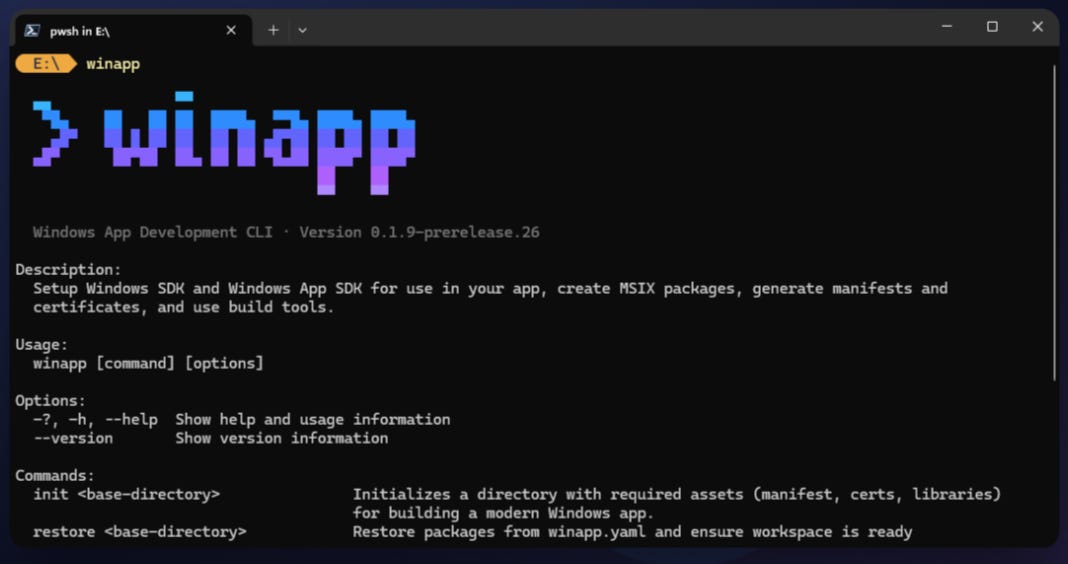
Microsoft this week released Windows App Development CLI (Winapp), a new open source command-line tool to streamline Windows application development. Winapp is designed to help developers create, configure, and manage app projects across multiple frameworks and toolchains from the terminal.
Read more: Microsoft
Memecoin schemes targeting open source maintainers
Kelsey Hightower, a longtime open source contributor and former Google cloud engineer known for his Kubernetes work, says scammers are creating memecoins tied to popular open source projects and pressuring maintainers to “claim” upfront payouts to legitimize the scheme. Hightower said he received an email claiming roughly $26,000 was ready to be collected, complete with urgency tactics and a how-to site for “participation.” He stressed he did not create or endorse any token and described the pattern as automated pump-and-dump behavior that recruits maintainers as unwitting co-conspirators with promises of future gains.
Read more: Kelsey Hightower
25 years of Drupal
Dries Buytaert, founder of the Drupal content management system, marked the project’s quarter-century anniversary with reflections on scale, community, and sustainability. Key takeaways include the importance of designing for community participation, recognizing maintenance as leadership, and balancing volunteer and paid contributions to keep open source ecosystems healthy.
Read more: Dries Buytaert
And finally…
A Jolla good comeback

Finnish company Jolla is edging closer to shipping a new smartphone built around Sailfish OS, its Linux-based mobile operating system. The device, now open for pre-orders, runs Sailfish OS 5 and is positioned as an alternative to Android and iOS. Pre-orders require a €99 refundable deposit, which counts toward a pre-order price starting at around €579, with final pricing expected to land closer to €599–€699 once production begins.
The phone is built around a 5G MediaTek chipset, 12 GB of RAM, 256 GB storage, a 6.36-inch AMOLED display, and a 5,500 mAh user-replaceable battery with a dual-camera setup, and supports Android apps through a compatibility layer rather than a full Android fork.
Read more: The Register & Jolla Phone