
Why Warp finally opened up its code
CEO Zach Lloyd discusses Warp's path to open source, OpenAI sponsorship, AI slop, & more

Welcome to Forkable’s Open Profile column, where I go in-depth on key projects, companies, and figures from across the open source realm.
In this edition, I check in with Zach Lloyd, founder and CEO of Warp, a developer tooling startup behind a popular AI-native terminal that announced a couple of months back that it was open-sourcing its client after years of internal debate.
The move reflects a wider rethink happening across developer tools — as coding agents take on more of the implementation work, companies are running into the same problem: how do you keep human judgement in the loop without it becoming a blocker?
Lloyd’s bet is that opening the codebase lets a community of contributors absorb that work alongside Warp’s own team, particularly across the long tail of platforms, edge cases, and quality-of-life fixes that a startup's core engineering likely has less bandwidth for.
“We’ve gone from having a team of 30 engineers who can build on Warp, to having hundreds of people who can help contribute,” Lloyd explained.
Read the story in full below.
The path to open source
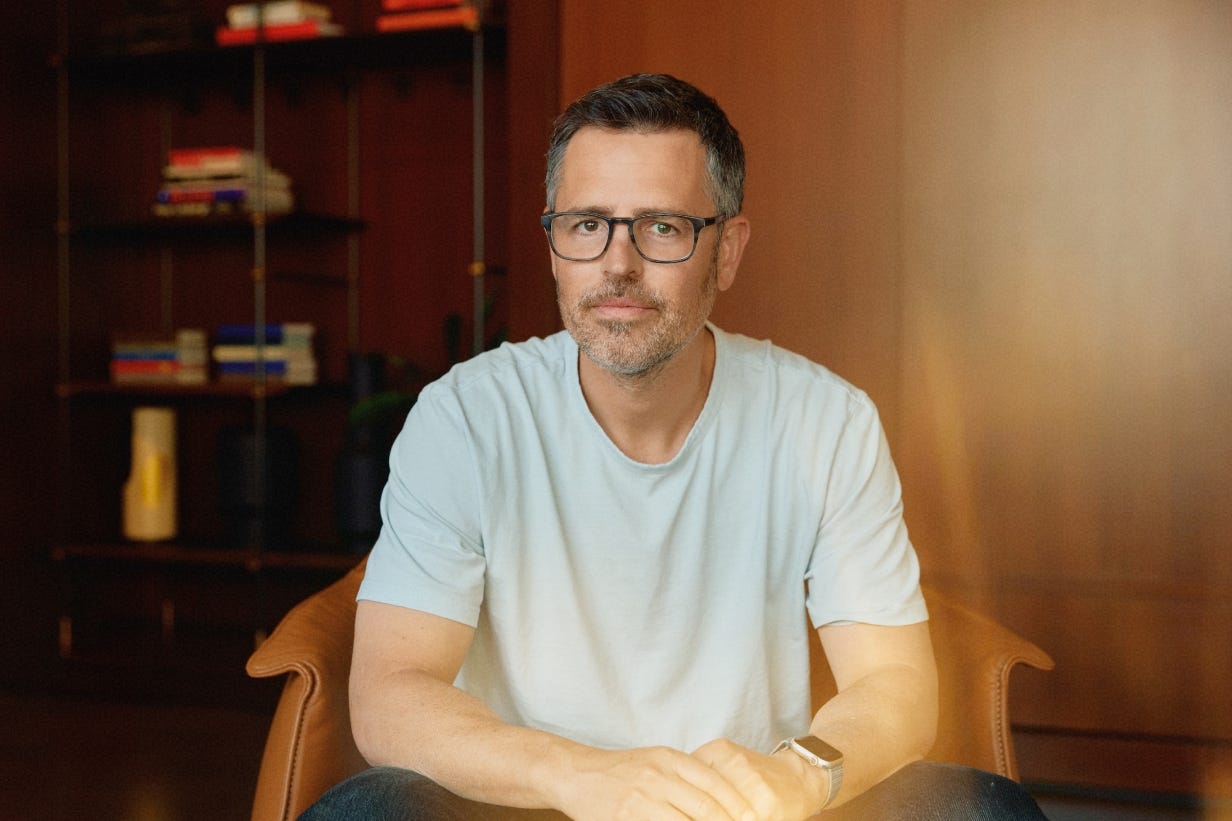
Zach Lloyd spent more than seven years as a principal engineer at Google, where he led engineering efforts around Google Sheets and the wider productivity suite. After leaving in 2014, he co-founded and served as CTO of SelfMade, a venture-backed New York startup, before a short stint as interim CTO at TIME. He launched Warp in 2020.
The company, essentially, started as a terminal — a rebuild of one of software’s oldest interfaces, aimed at developers who wanted speed and collaboration baked in. It has since grown into what Lloyd calls an “agentic development environment,” with code editing, diffs, and the ability to move agent sessions to the cloud. Warp now claims close to a million active developers, with users at companies including Google, Amazon, GitHub, Nvidia, and even OpenAI.
The decision to open the client, though, took years to arrive at, with Lloyd alluding to these plans online as far back as 2022. “Even when we first launched Warp, I always thought the client would end up open source,” Lloyd told Forkable. “We kind of revisited it every single year.”
Tipping the balance
Running a popular open source project at any kind of volume usually means triaging issues, reviewing contributions, and keeping quality consistent — a heavy lift for a relatively lean team.
What changed Lloyd’s mind was watching Warp’s own engineers shift their internal workflow toward agents. If agentic development was producing good results inside the company, he reasoned, the same approach might work applied to a public repo — with agents handling implementation and humans focused on direction and review.
And so that became the model: issues filed by the community get picked up by agents, specced, implemented, reviewed, and verified, with human checkpoints built in at each stage.
Lloyd described the result as something akin to a public software factory.
“We ended up thinking that, with agents doing every step from triage to speccing hard changes to implementing them to code reviewing them, we could actually run it with higher efficiency,” he said.
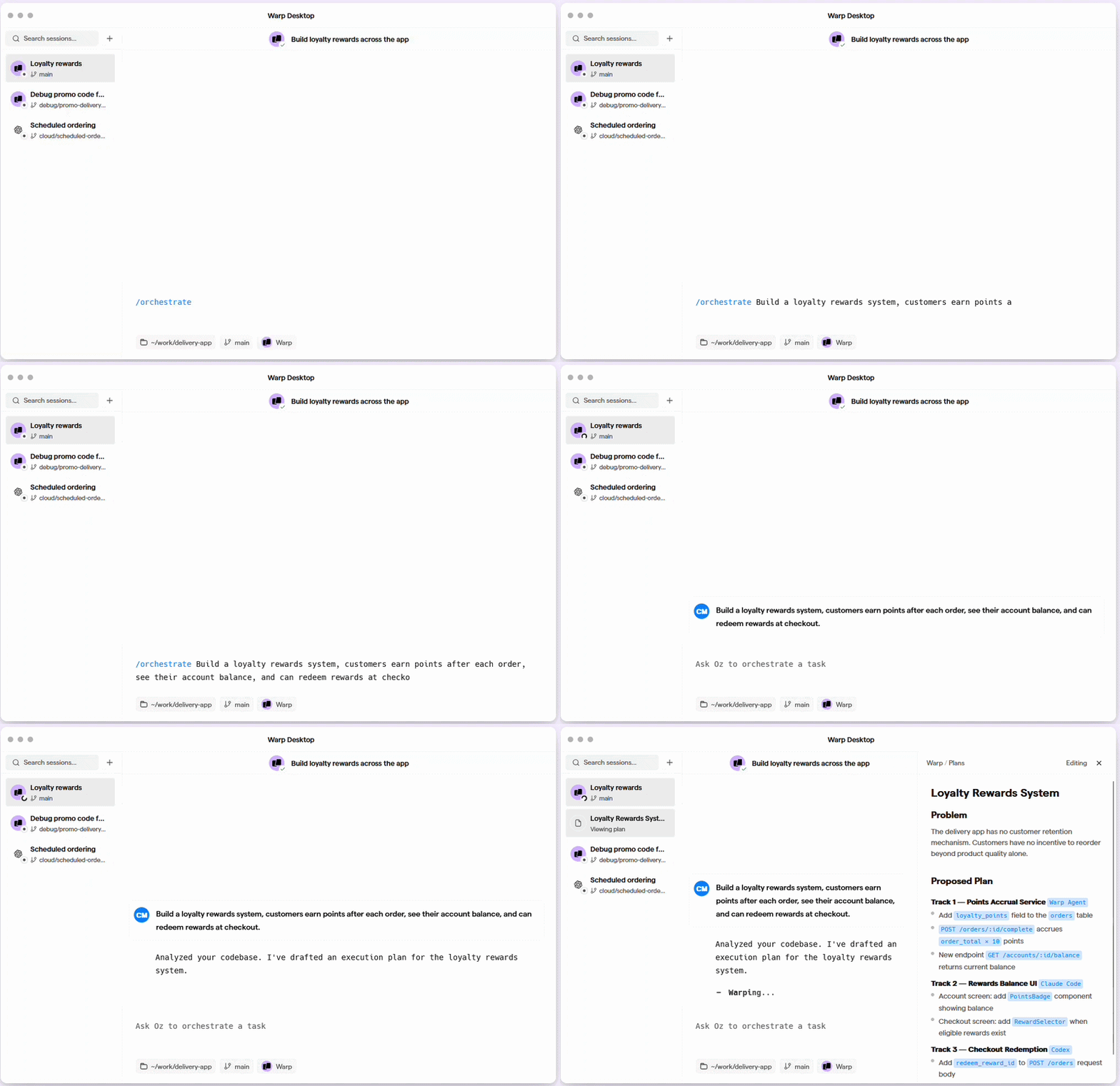
The orchestration behind all this runs on Oz, Warp’s platform for managing agent workflows across local and cloud environments. Through Oz, teams can run agents in parallel, automate recurring workflows, and monitor long-running tasks centrally — with every agent run generating an audit trail accessible to any team member.
The OpenAI factor
It’s worth noting that OpenAI is the founding sponsor of the new open-source repository, with the agentic workflows powered by GPT models. And this detail has been used by some to poke holes in the open-source credentials of the project, notably rival AI coding platform Kilo Code, which argued that opening the codebase while routing the recommended contribution workflow through a proprietary platform backed by a single AI provider amounts to quite a significant caveat.
“A truly open IDE experience makes it as easy as possible to switch between models freely - with no one provider dominating or controlling the experience,” Kilo wrote in a blog post at the time.
On the commercial side, Warp does support bring-your-own-key (BYOK) access for the likes of Anthropic, Google, and OpenAI, and Lloyd said the company is open to bringing on additional sponsors beyond as the open source project matures. "We sort of want to be Switzerland in this world," he said. “But we’re a startup, and having this support for the agents, because it’s expensive, is really valuable, and they’ve been a great partner for us.”
The early signs, by Lloyd’s account, have been positive. Some two months on, the repository has accumulated nearly 63,000 GitHub stars and more than 5,100 forks, and Lloyd said contributions are coming in at a rate of hundreds per week. He pointed to fixes arriving for things the core team simply wouldn't have had bandwidth for, such as internationalisation, Windows support, and embedded systems.
"Developers are fixing, improving stuff that we wouldn't have done on our own," he said.
Of course, there’s a clear competitive logic underneath the openness. Warp operates against better-funded, closed-source rivals, and opening the codebase functions as a way to extend its effective team size without growing headcount.
“We’ve gone from having a team of 30 engineers who can build on Warp, to having hundreds of people who can help contribute,” he said.
He sees this as a broader strategic option for companies in general. “I think it’s one of the key things a startup can choose to do to break through,” he said, pointing to the secondary benefits of community goodwill and developer interest beyond the contributions themselves.
The slop question
Open source communities are split on agent-generated contributions — some projects ban them outright over quality concerns. Warp has gone the other way, though Lloyd is careful to draw a line between that and full automation. “We’re on the other extreme end,” he said, while acknowledging it’s one of the risks the company has to work hard to mitigate.
The way Warp has structured it, human judgement is built into each stage of the pipeline. An issue being filed doesn’t automatically mean it gets built — someone has to decide it’s worth pursuing. Before implementation begins, the team assesses whether the proposed approach feels like the right product experience and the right technical solution. And despite the speed penalty it carries, everything still goes through human code review. “We would go faster if we didn’t do human code review,” Lloyd said, “but we are trying to make sure we’re striking the balance.”
In truth, there’s perhaps a more fundamental question at play here, about what open source contribution even means in this model. Warp is written in Rust — a powerful but demanding language that would traditionally put meaningful contribution out of reach for many developers. With Agents handling the implementation work, the human role shifts toward ideas, direction, and verification — lowering the bar for who can meaningfully participate.
“You don’t even need to know how to code to improve the app,” he said. “A lot of people don’t know Rust, but they can still contribute.”